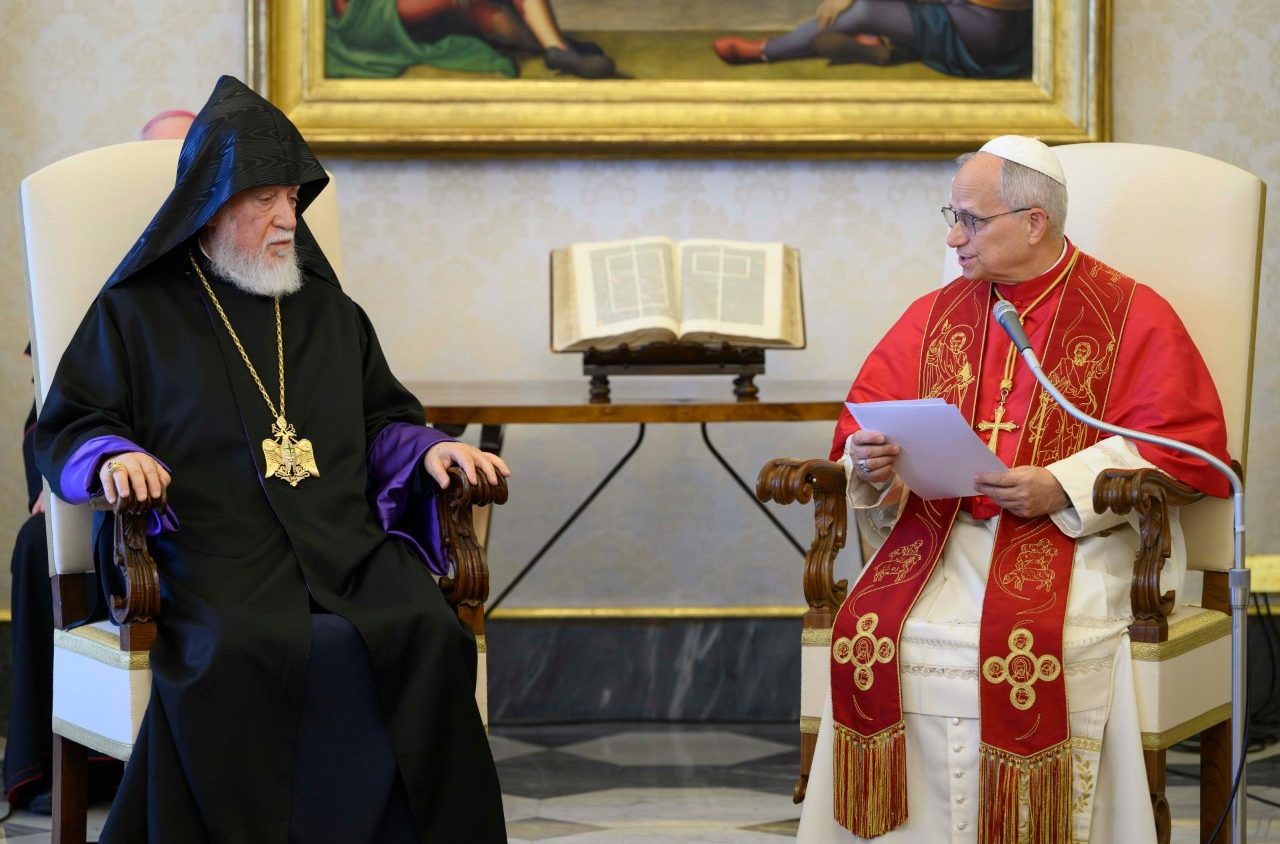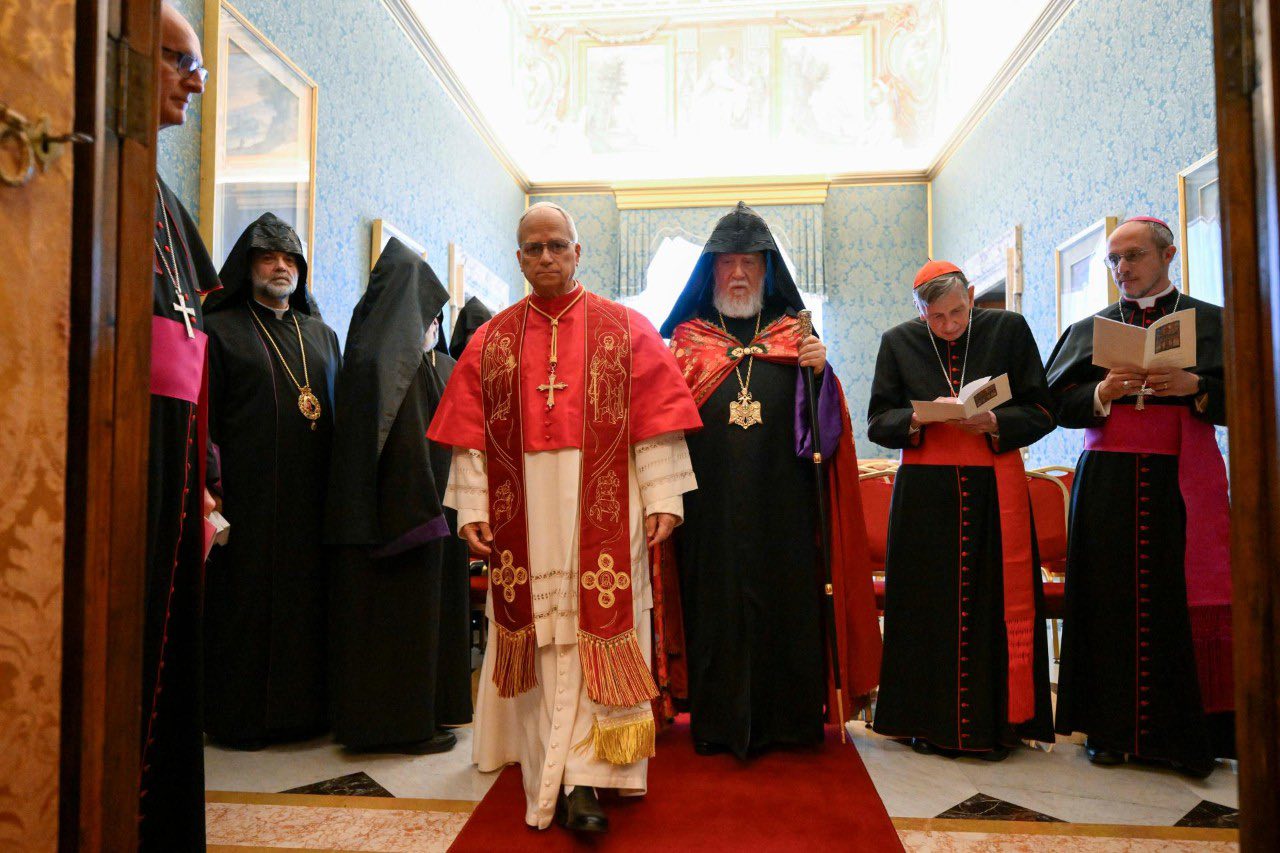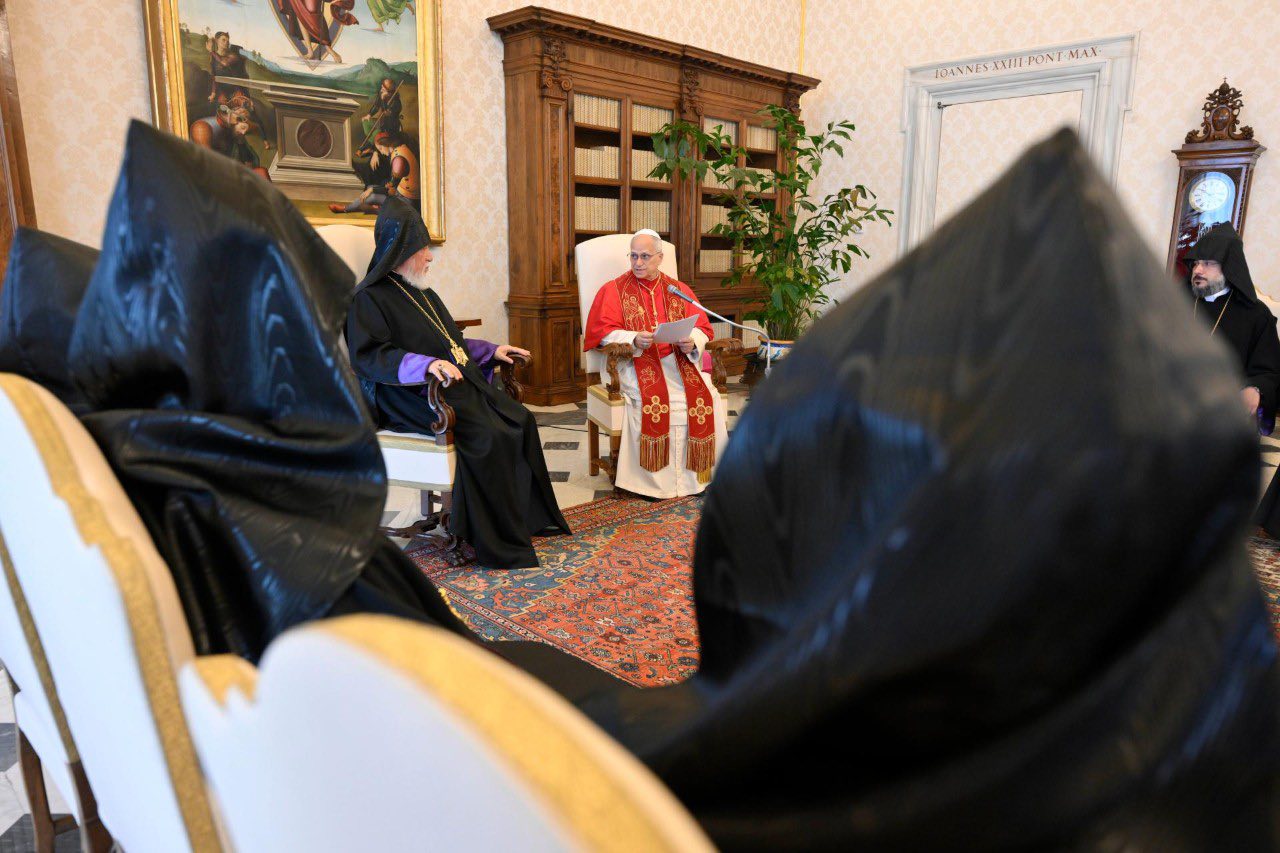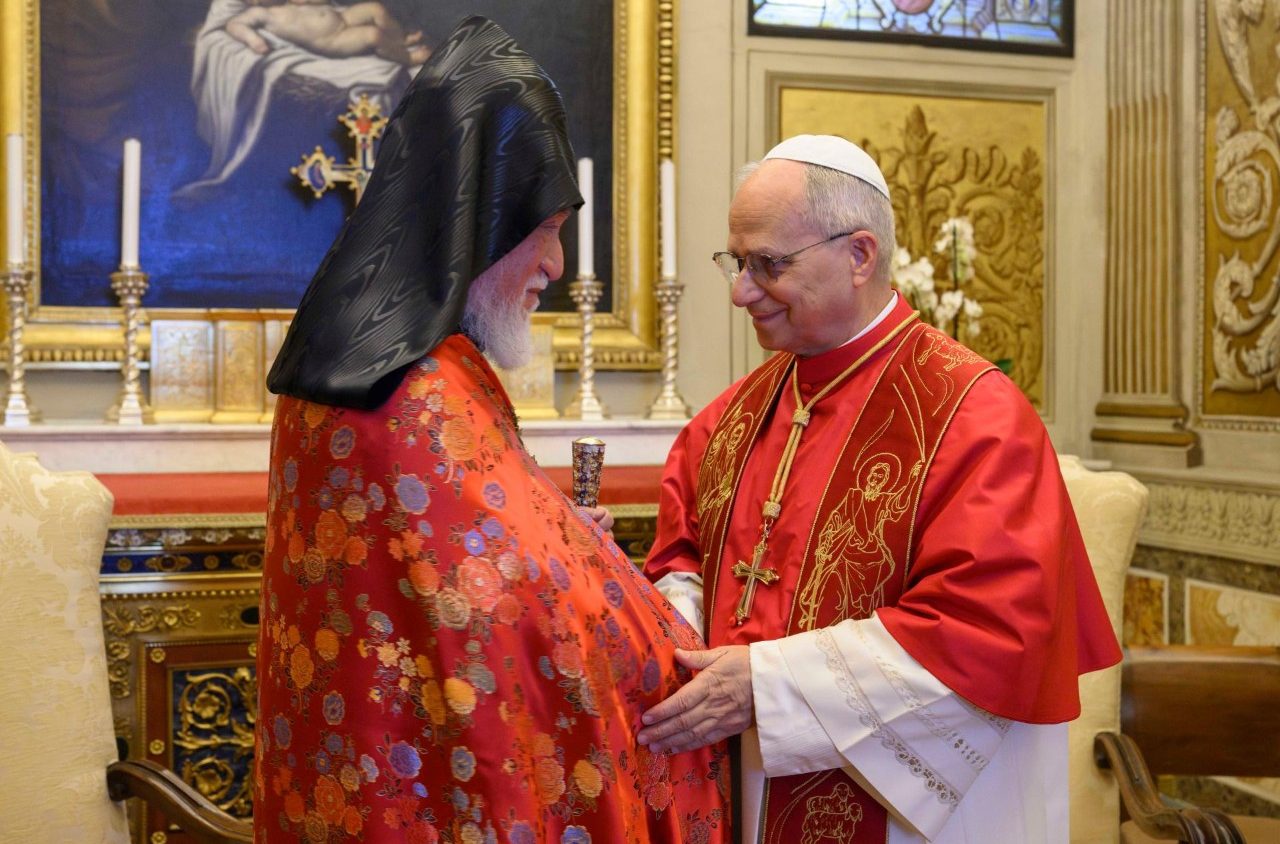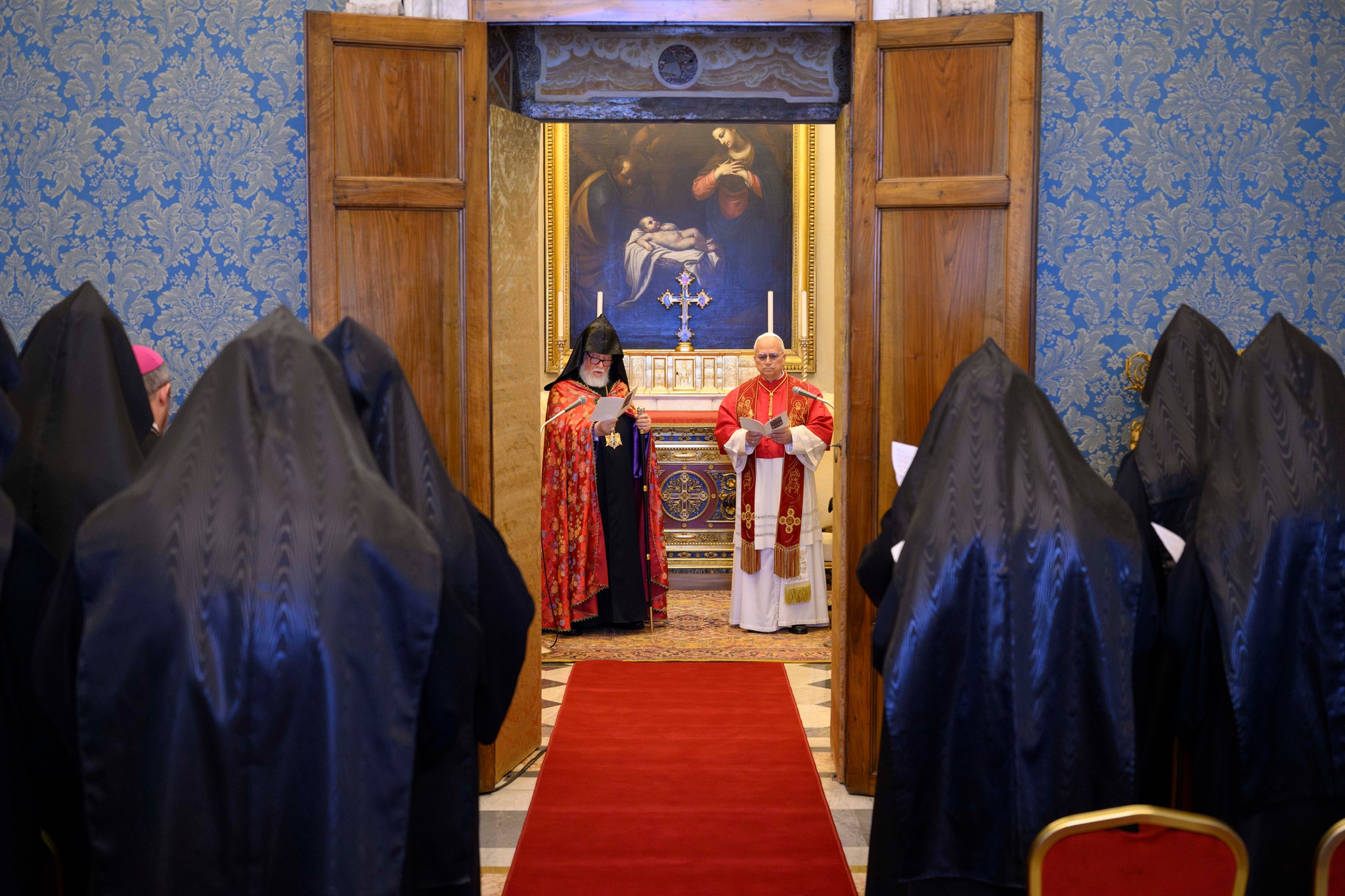
The private meeting between the two spiritual leaders was followed by an official exchange of addresses in the presence of members of His Holiness’s delegation and representatives of the Vatican.
In his address, His Holiness Aram I referred to the historic relationship between the Armenian Church and the Vatican, a relationship that expanded significantly during the period of the Cilician Armenian Kingdom after the 11th century. This relationship was further strengthened with the emergence of the ecumenical movement and found expression through theological dialogues, inter-church meetings, and various forms of cooperation. Catholicos Aram I then highlighted two important points:
He expressed his deep gratitude for the support shown by the Vatican regarding the Armenian Genocide and the restoration of the rights of the Armenian people, as well as for its support of the right of self-determination of the people of Artsakh.
His Holiness welcomed the Vatican’s support for Lebanon, recalling that Lebanon occupies a special place in the life of the Armenian nation, as it became the center of the renaissance of the Armenian nation following the Genocide. He also emphasized Lebanon’s importance as a country of Christian-Muslim coexistence.
Underscoring the special importance of inter-church relations, His Holiness Aram I stated that the Catholicosate of the Great House of Cilicia would continue its close cooperation with the Vatican and, more broadly, with the Catholic Church in the same ecumenical spirit and commitment.
In his address, His Holiness Pope Leo XIV likewise referred to the relationship between the Armenian Church and the Catholic Church, particularly during the Cilician period, and later to its further development after the Catholicosate of Cilicia was transferred to Antelias, Lebanon. Within this context, he also praised the important role of His Holiness Aram I in the ecumenical movement, especially through the World Council of Churches and in expanding cooperation with the Catholic Church. In his remarks, Pope Leo XIV referred to Saint Nerses Shnorhali as a champion of inter-church relations. “My thoughts turn to Saint Nerses the Gracious, Catholicos of Cilicia, who may be regarded as a pioneer of ecumenism – and whose recent inclusion in the Roman Martyrology is a further example of that ‘ecumenism of the saints’ which already unites our Churches,” stated His Holiness. Pope Leo further stressed the importance of Lebanon both for Christianity in the region and as a model of Christian-Muslim coexistence.
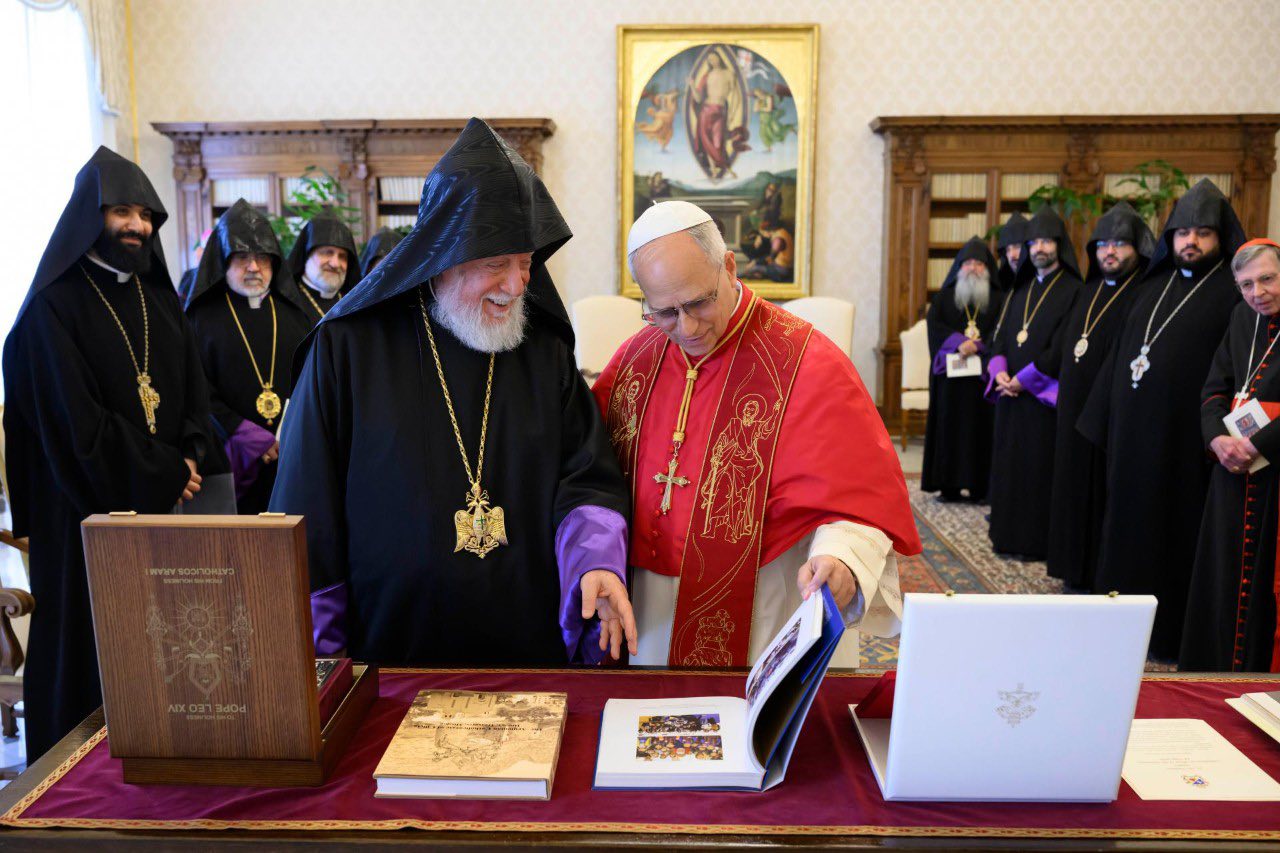
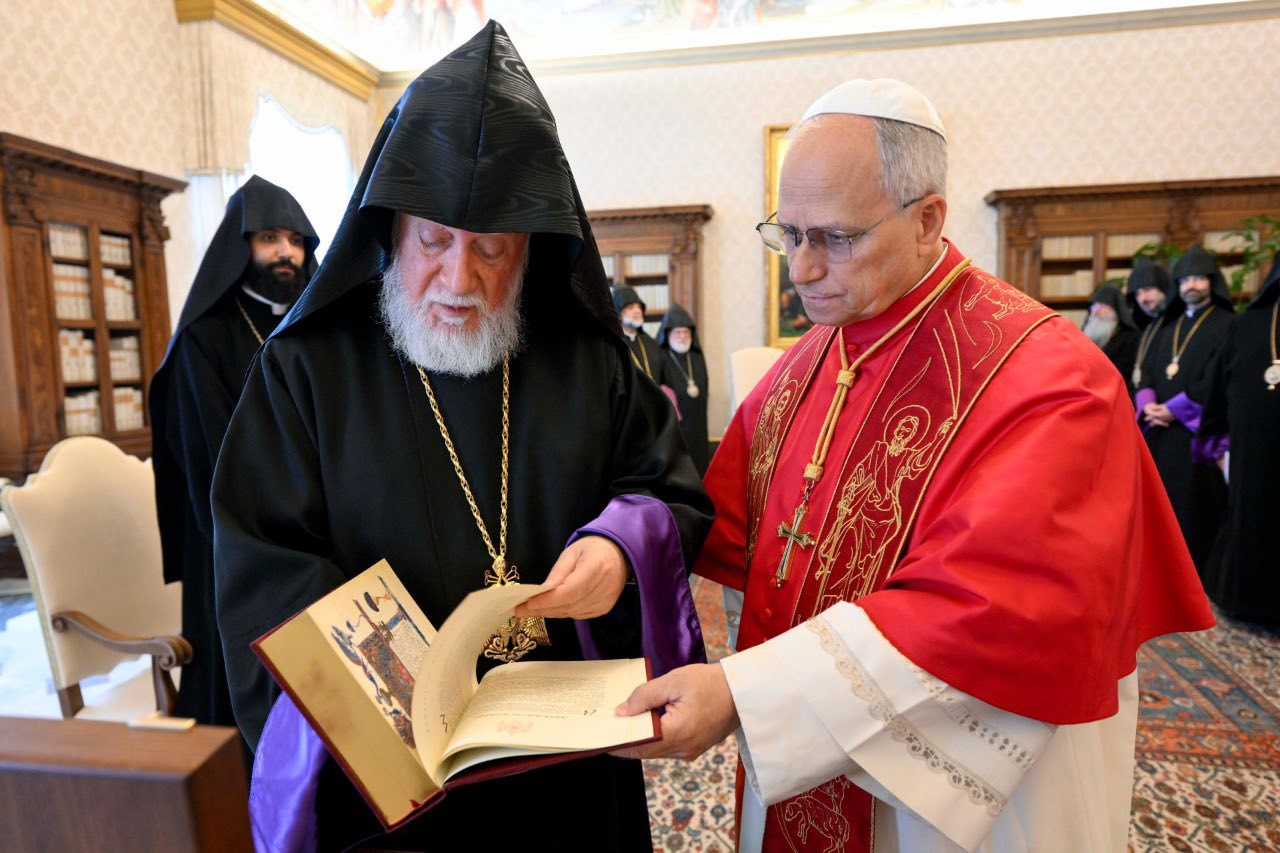
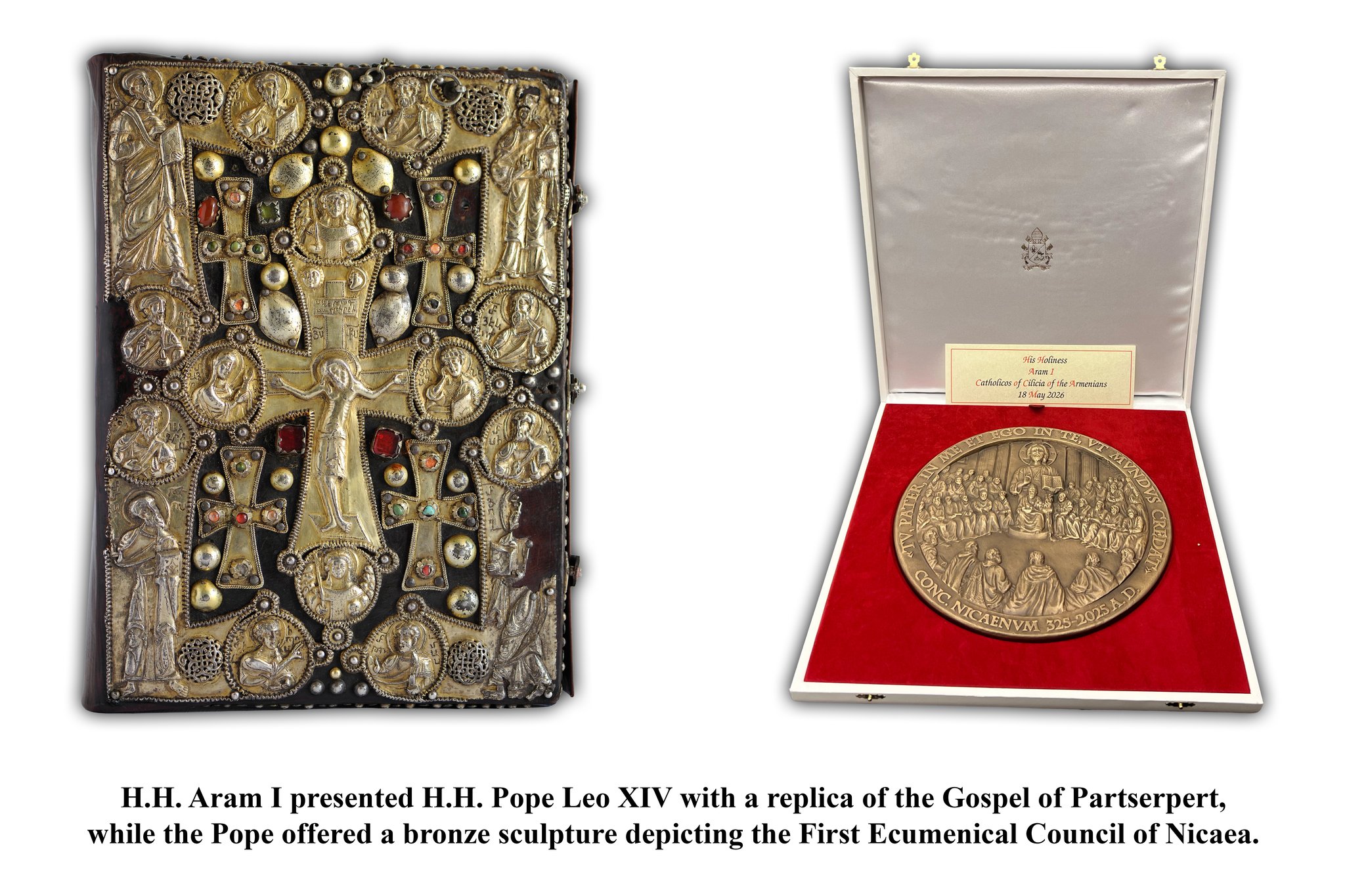
Following the official exchange of addresses, His Holiness Aram I introduced the archbishops, bishops, and clergy who were members of the delegation, after which gifts were exchanged. The Catholicos presented Pope Leo with a replica of the Gospel of Partserpert, while the Pope offered a bronze sculpture depicting the First Ecumenical Council of Nicaea.
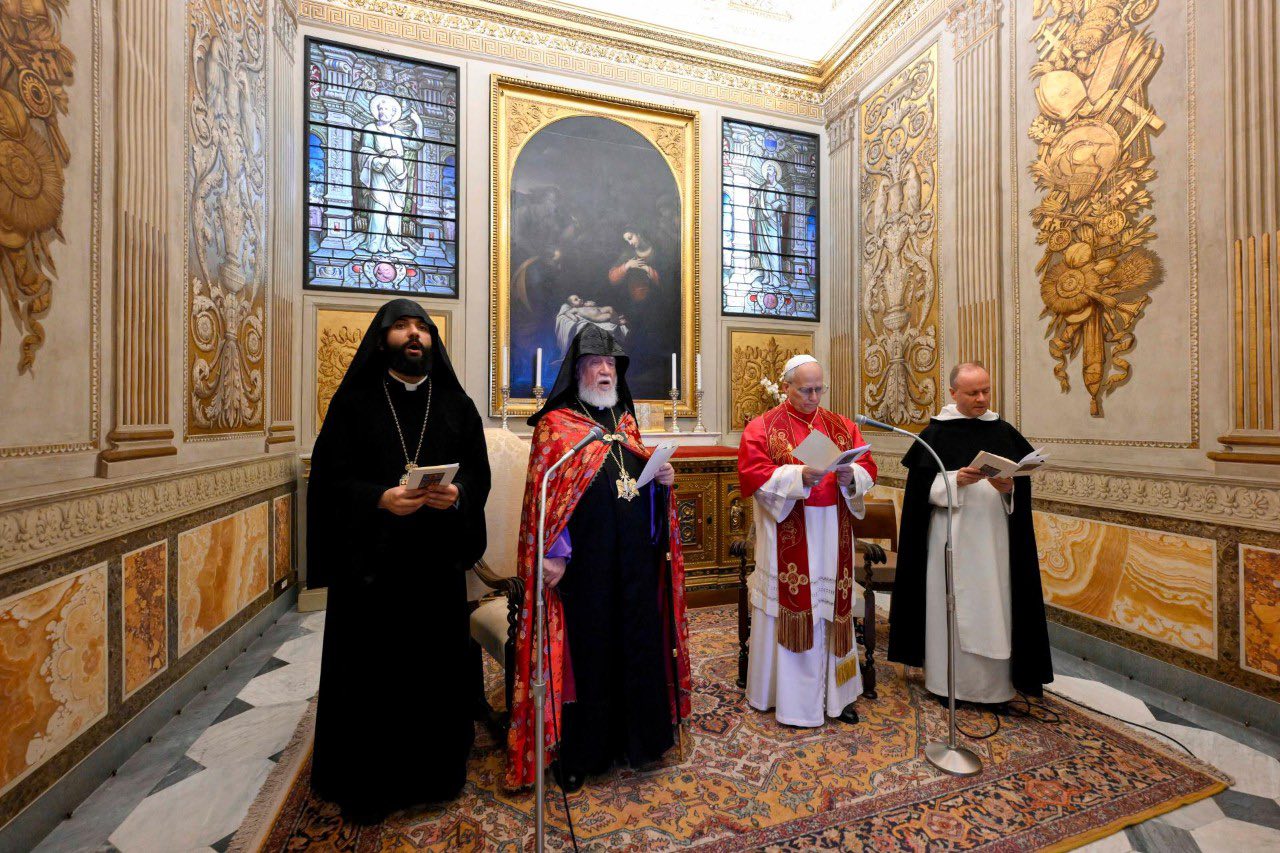
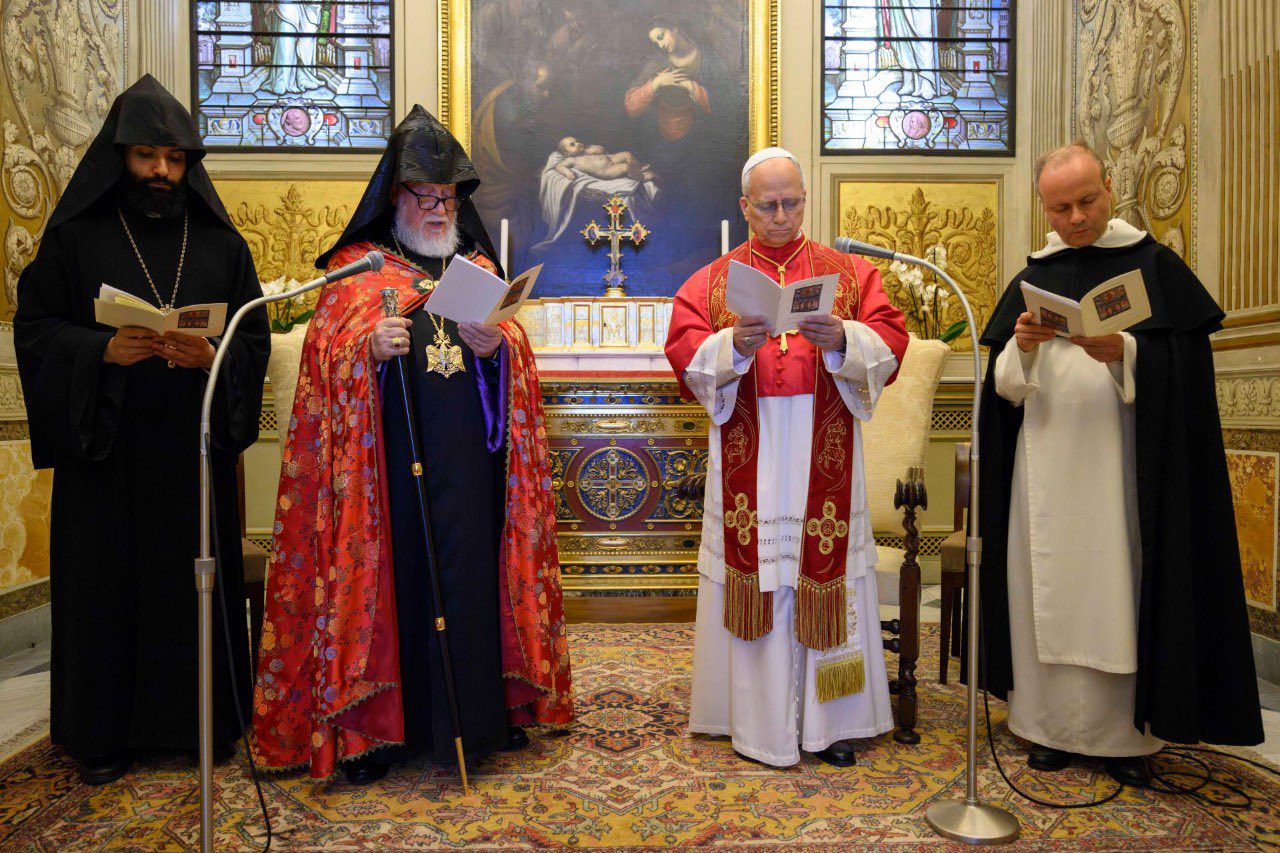
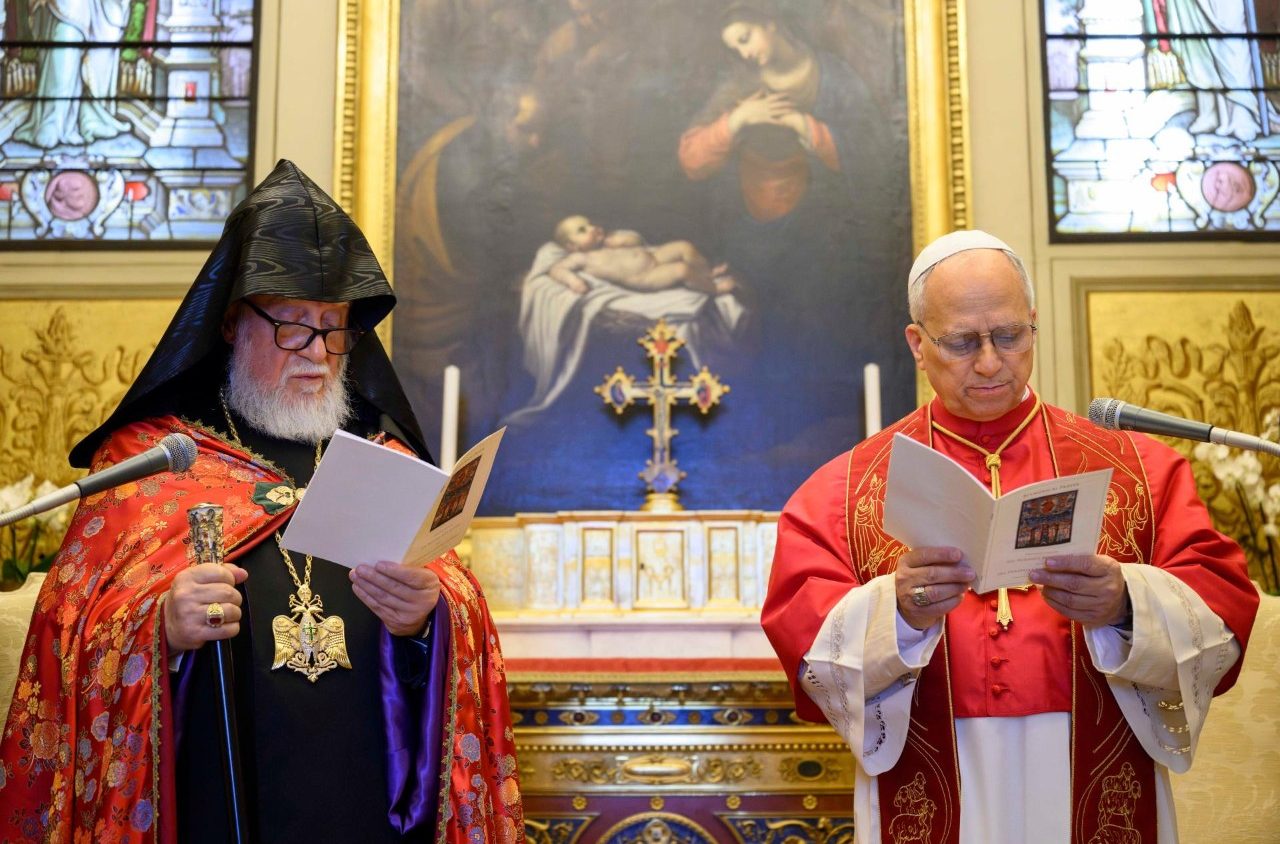
Subsequently, a joint service was held in the Urban VIII Chapel of the Apostolic Palace under the presidency of Pope Leo XIV and Catholicos Aram I. The ceremony consisted of prayers and hymns drawn from the liturgical tradition of the Armenian Church.